Why preserving tradition isn’t about looking backward, but understanding who we are.
We often speak of heritage as though it belongs to another time.
Something to be admired during festivals.
Displayed in museums.
Remembered through old photographs.
Beautiful, certainly.
But distant.
Perhaps that’s where we’ve misunderstood it.
Heritage is not nostalgia.
It is identity.
More Than Memories
Nostalgia invites us to revisit the past with affection.
Identity shapes how we move through the present.
The languages we speak, the rituals we uphold, the food we share, the music that stirs something familiar within us, and the textiles we choose to wear—all of these quietly tell the story of who we are.
Culture isn’t separate from our everyday lives.
It lives within them.
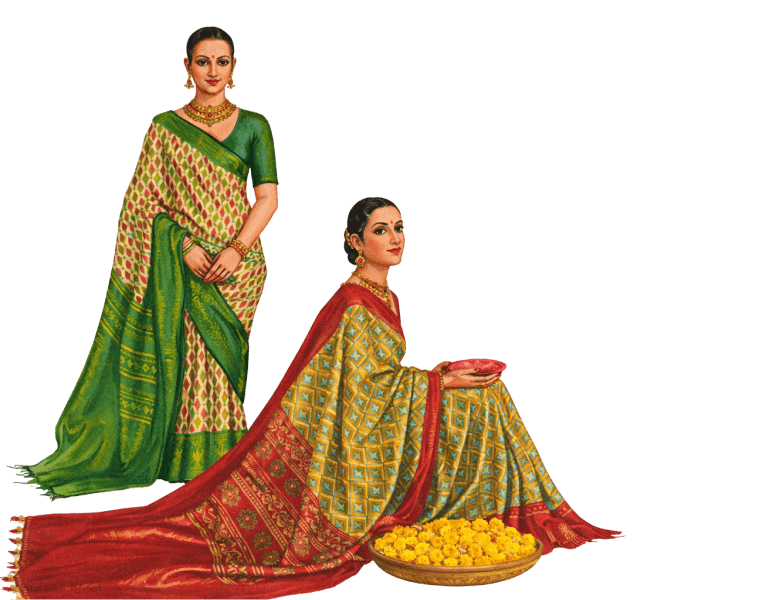
A Banarasi saree, for instance, is more than an occasion wear choice. It carries centuries of artistry, regional history, and the hands of artisans who have preserved techniques through generations. When we wear it, we aren’t simply embracing tradition.
We’re participating in a continuing narrative.
In a World of Sameness
Globalisation has brought remarkable opportunities. Ideas travel faster. Trends cross borders within seconds.
Yet, in a world where everything increasingly looks alike, there is a growing desire to hold onto what makes us distinct.
Young Indians are rediscovering handloom, handcrafted textiles, and regional crafts not because they reject modernity, but because they understand that progress and heritage can coexist.
You can embrace innovation and still honour your roots.
You can be global in perspective and deeply local in identity.
The two are not opposites.
The Responsibility of Preservation
Preserving heritage is often viewed as an act of sentiment.
In reality, it is an act of responsibility.
When traditional crafts disappear, we lose more than products.
We lose stories.
We lose techniques refined over centuries.
We lose communities built around shared knowledge.
We lose pieces of ourselves.
Choosing heritage is not about resisting change.
It is about ensuring that change does not erase the wisdom and creativity that came before us.
Wearing Identity with Pride
For generations, many associated traditional attire with obligation—something reserved for weddings, ceremonies, or family expectations.
Today, that narrative is shifting.
A handwoven saree can be a statement of confidence.
A reflection of conscious consumption.
A celebration of craftsmanship.
A way of saying, “I know where I come from, and I carry it with pride.”
Heritage doesn’t ask us to remain unchanged.
It asks us to remain connected.
The Future of Heritage
Perhaps the future isn’t about choosing between tradition and modernity.
Perhaps it’s about weaving them together.
Building businesses that support artisans.
Creating spaces where craft remains relevant.
Passing stories to the next generation.
Choosing authenticity in a world of imitation.
Because heritage isn’t a relic to be preserved behind glass.
It is living, evolving, and deeply personal.
It shapes our choices, our values, and our sense of belonging.
And perhaps that’s why heritage matters so much.
Not because it reminds us of who we were.
But because it helps us remember who we are.
Heritage is not nostalgia. It is identity—and identities worth preserving are identities worth celebrating.